A Centuries-Old Craft
Letterpress
Letterpress printing was first introduced by Johannes Gutenberg in the mid-15th century. The impression is achieved by smoothly inking a raised surface and uniformly pressing a sheet of paper against it.
This antique craft has recently been revived and has become the new standard for stylish and elegant stationery, due to its peculiar and timeless look.
Letterpress has evolved to satisfy the taste of contemporary generations and to allow freedom of creativity, but it retains its hand-made nature that makes each printed piece so precious.
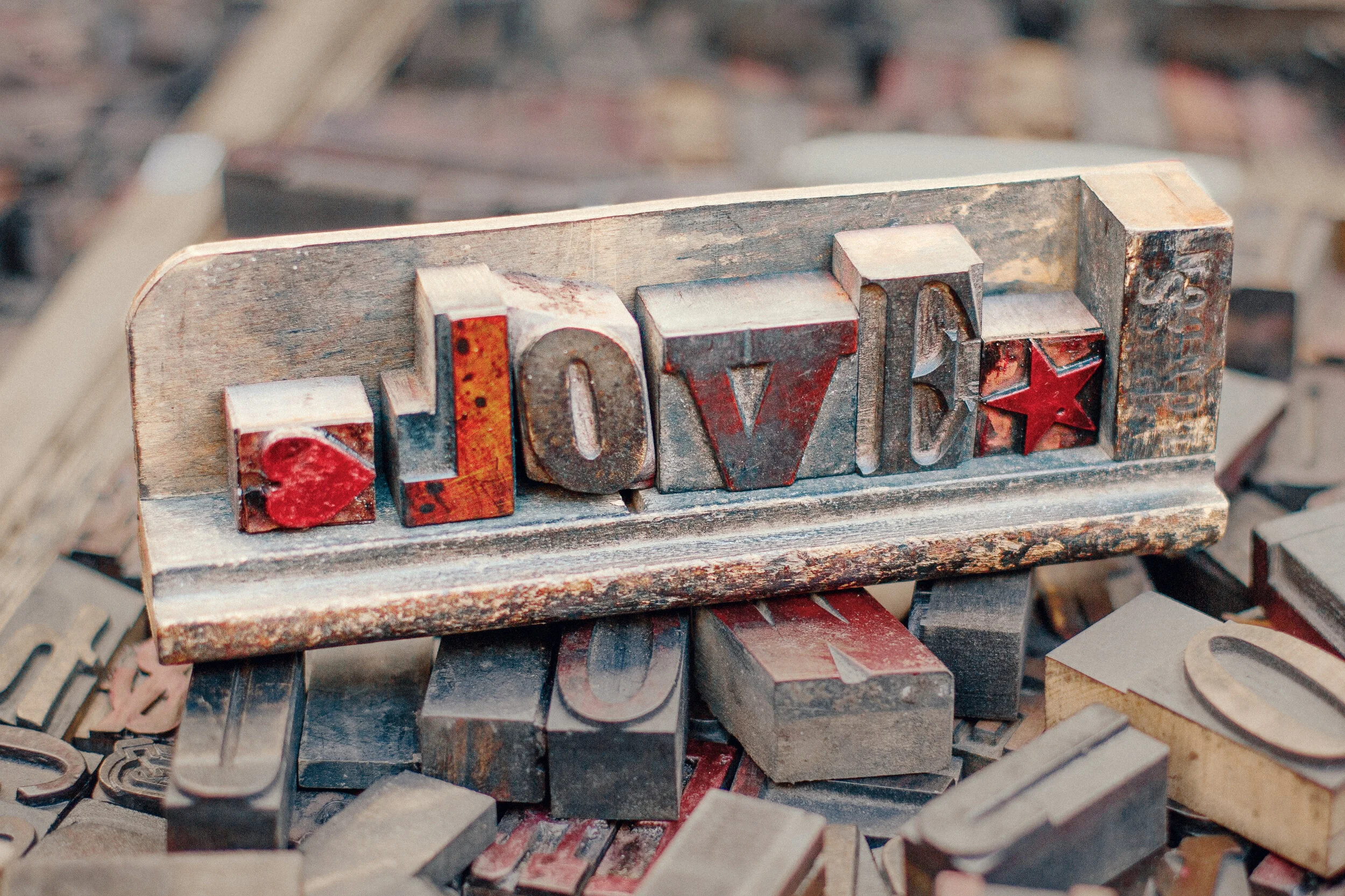
Wooden movable types used in traditional typography
Inside the Process
How I Work
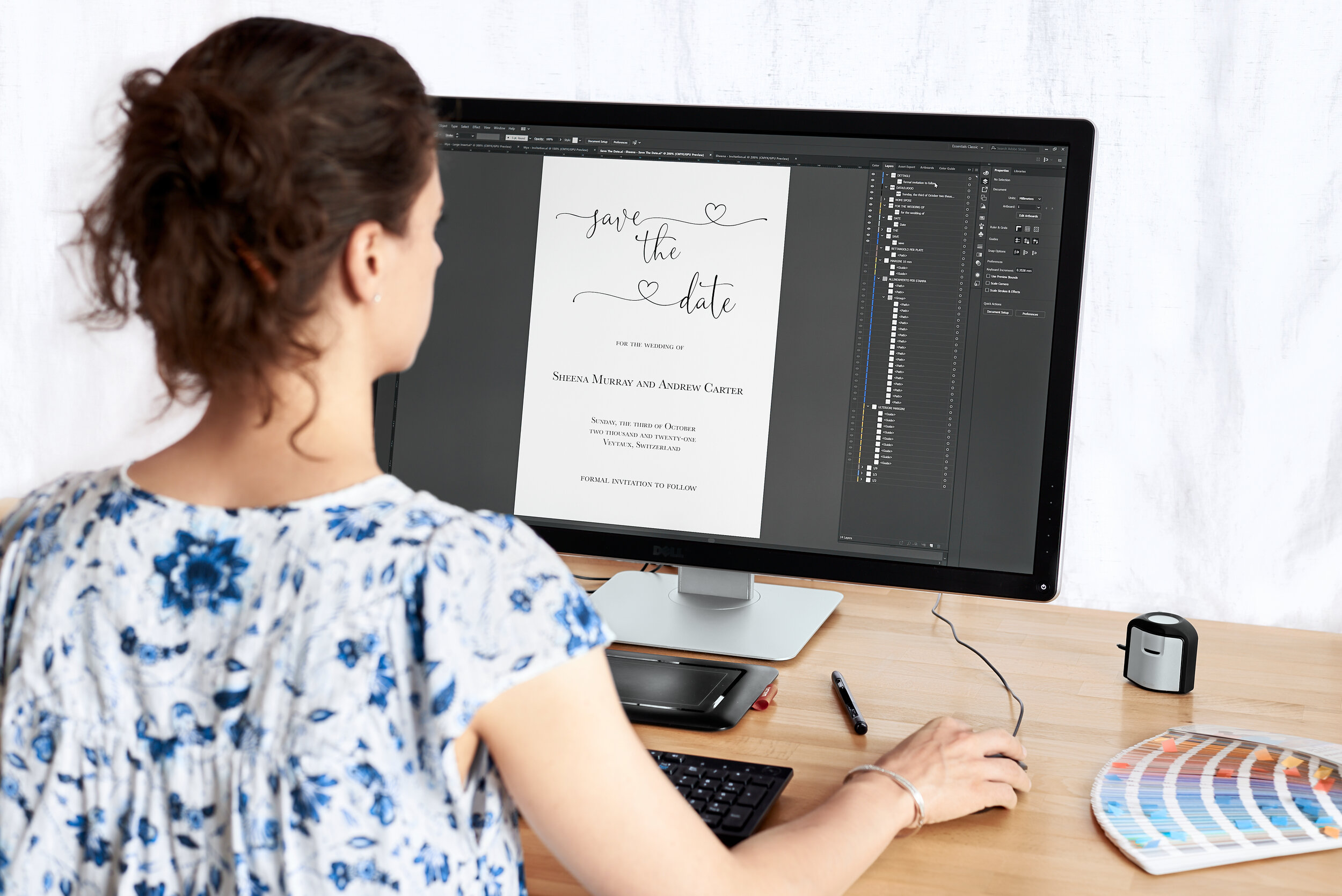
Designs
I create all typographic designs digitally, in my studio. I carefully choose all types to create impactful and balanced compositions, depending on the desired style and wording.
Every word is placed meticulously according to its weight and importance, because only a conscious manual arrangement can produce a harmonious design.
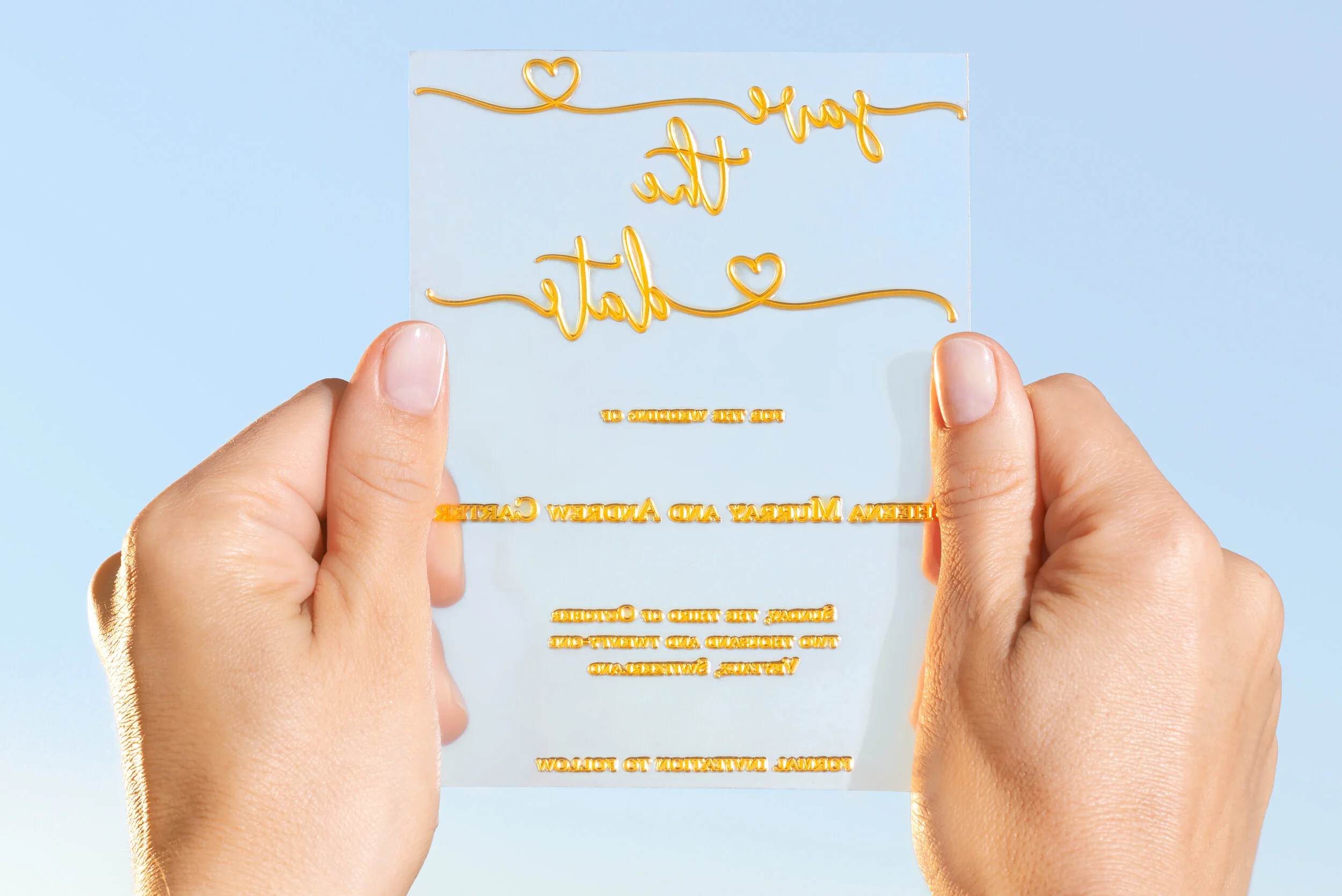
Polymer plates
Through a special photochemical process, the digital design materialises in the real world as a polymer plate. The typographic composition becomes tangible as a mirrored hard relief that can impress the paper.
Photopolymers allow for more versatile designs than traditional movable types, but special care must be taken to ensure that all the desired nuances are preserved in the analogue process, to properly ink the paper.
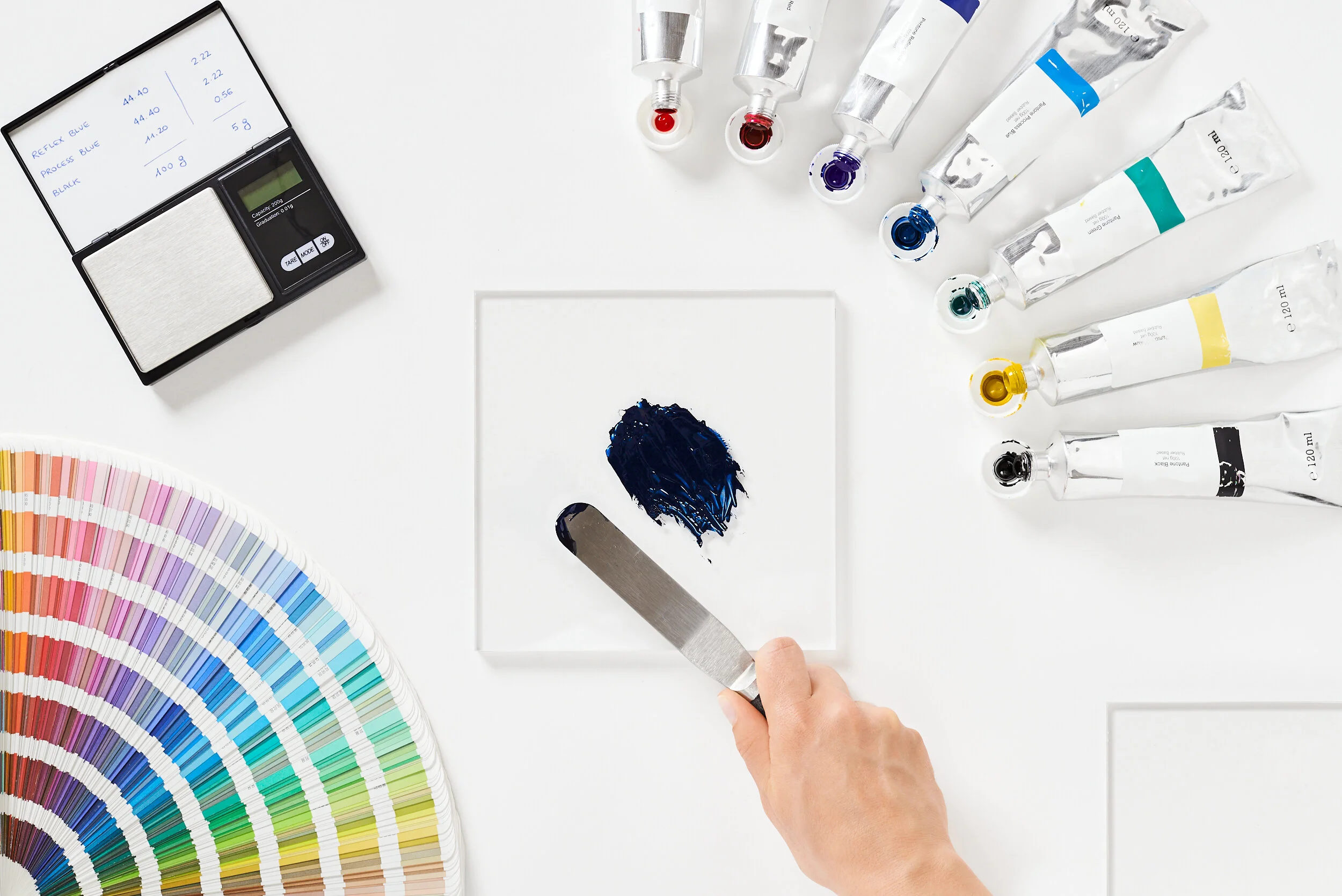
Inks
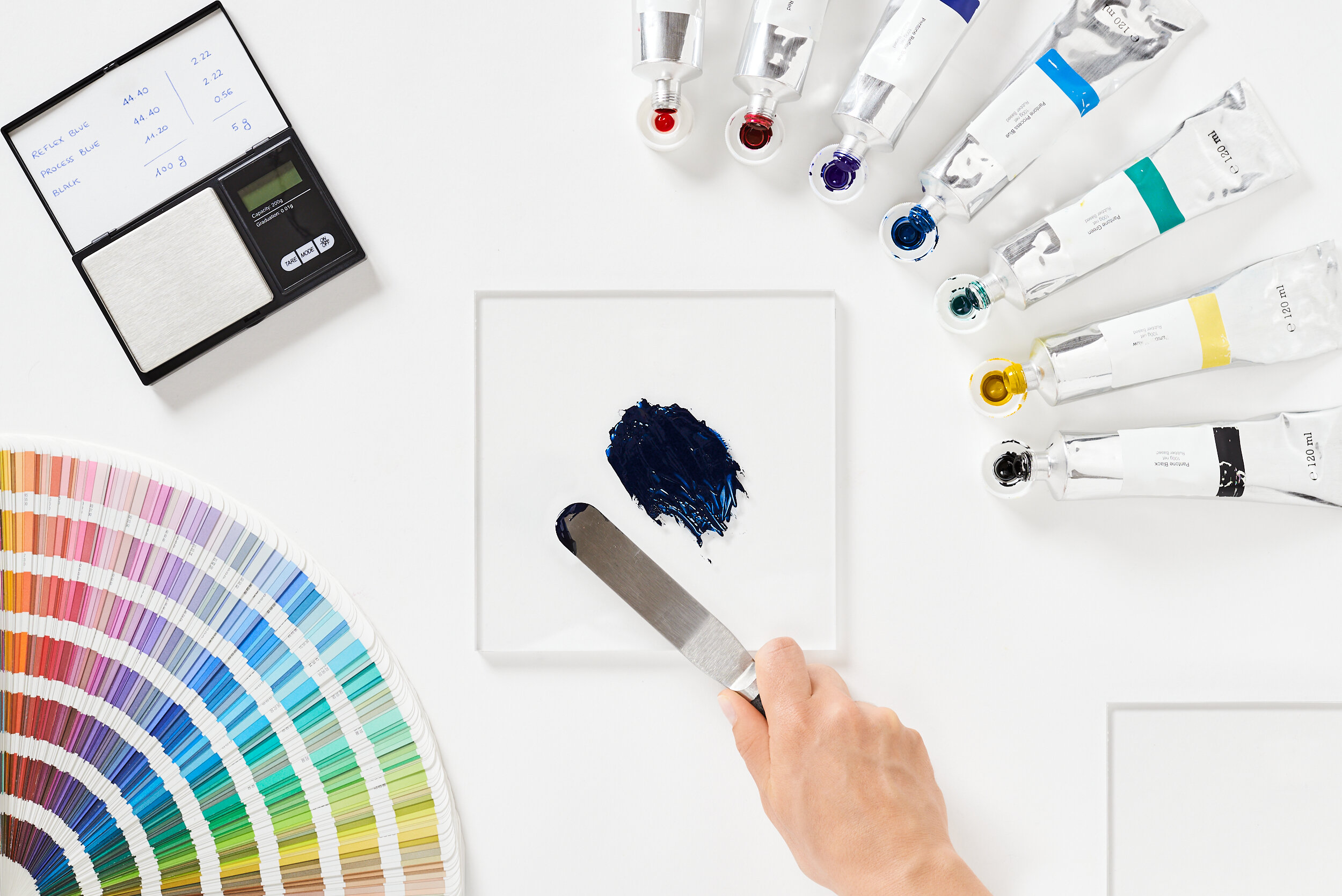
I mix all inks by hand, based on industry-standard formula guides, to achieve a wide palette starting from base colours.
A typical mix requires 2 to 4 base colours to be weighed with a precision of one hundredth of a gram. After a successful comparison against the reference, the ink is ready for the press.
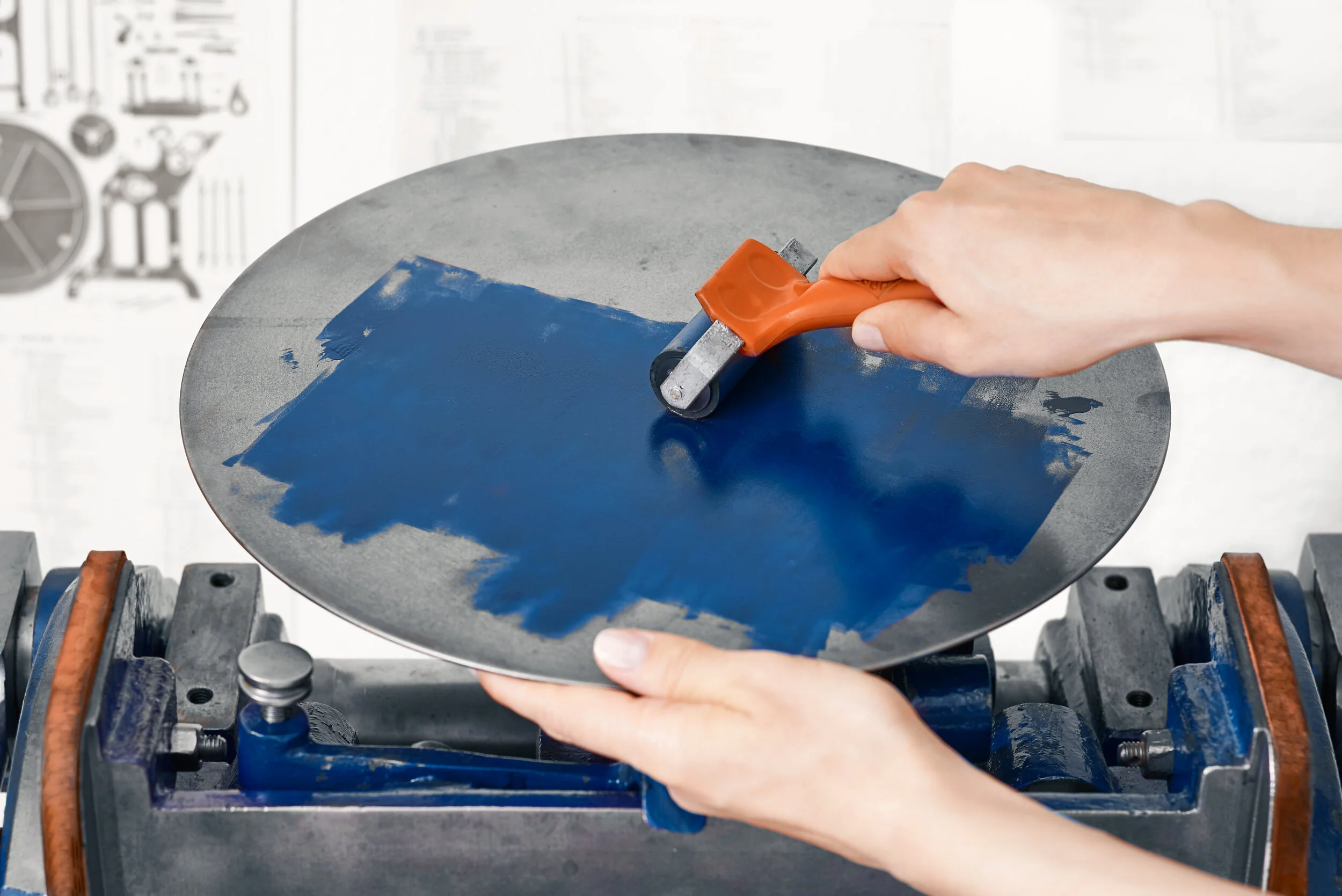
Inking the press
I apply a not too thin, not too thick layer of ink over the entire disc on the press, to achieve the right impression.
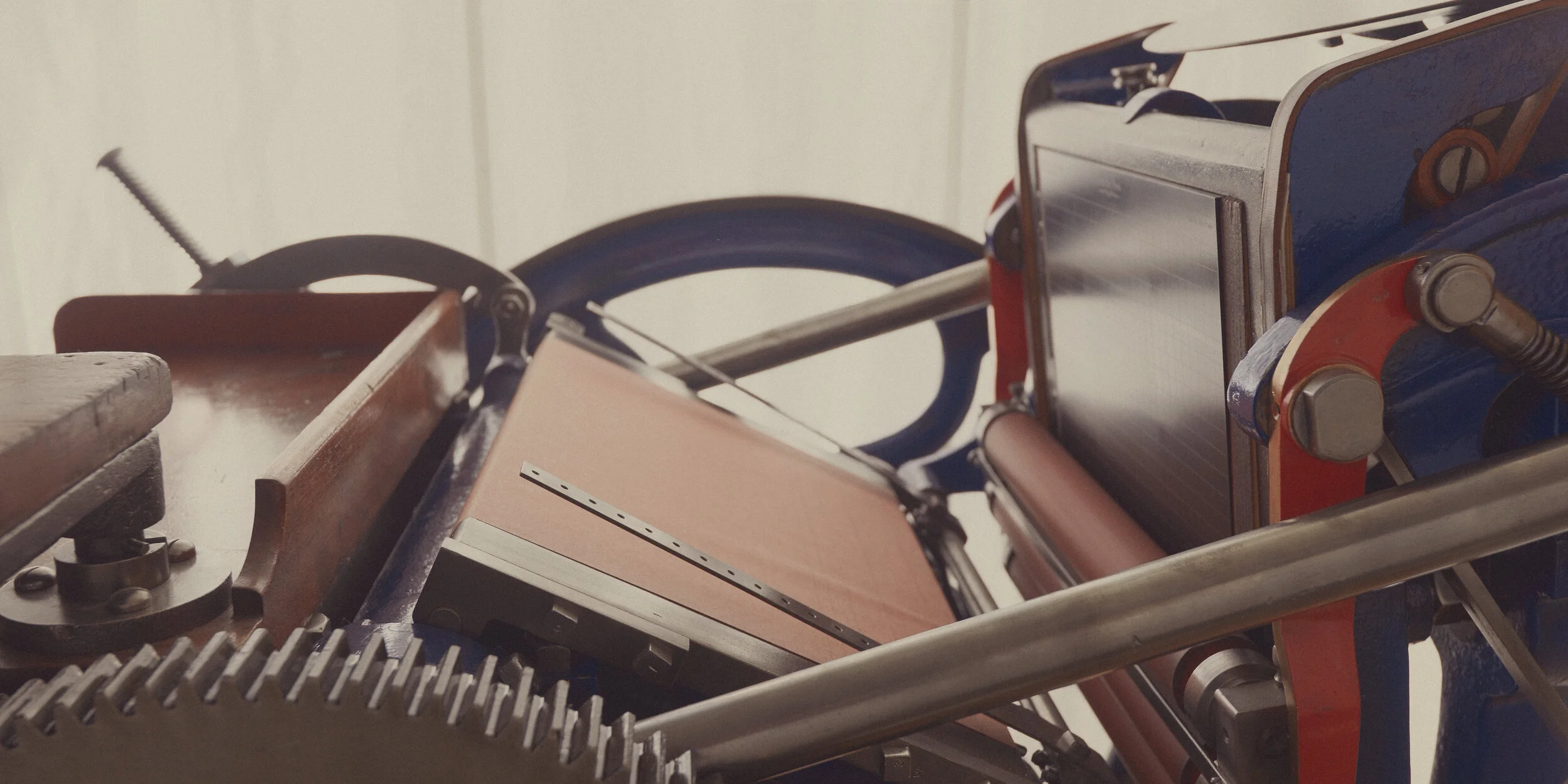
When the press is operated via its treadle, rubber rollers take the ink and distribute it to the top of the polymer plate, that is vertically attached to the press bed.
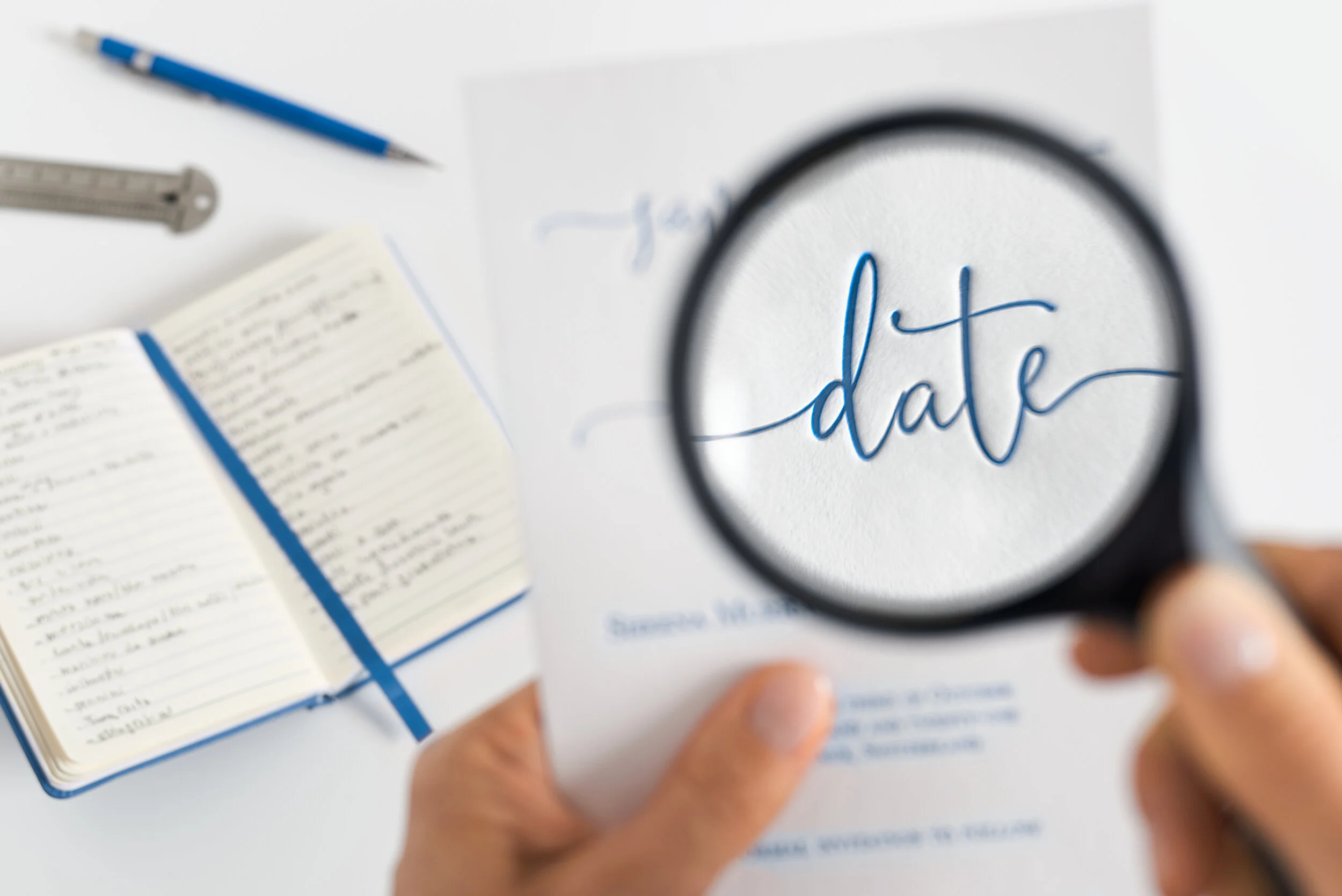
Fine-tuning the print
I run test prints until paper alignment, impression, type thickness, ink and colour are right. Each test run requires fine adjustments to the press, until everything is perfect.
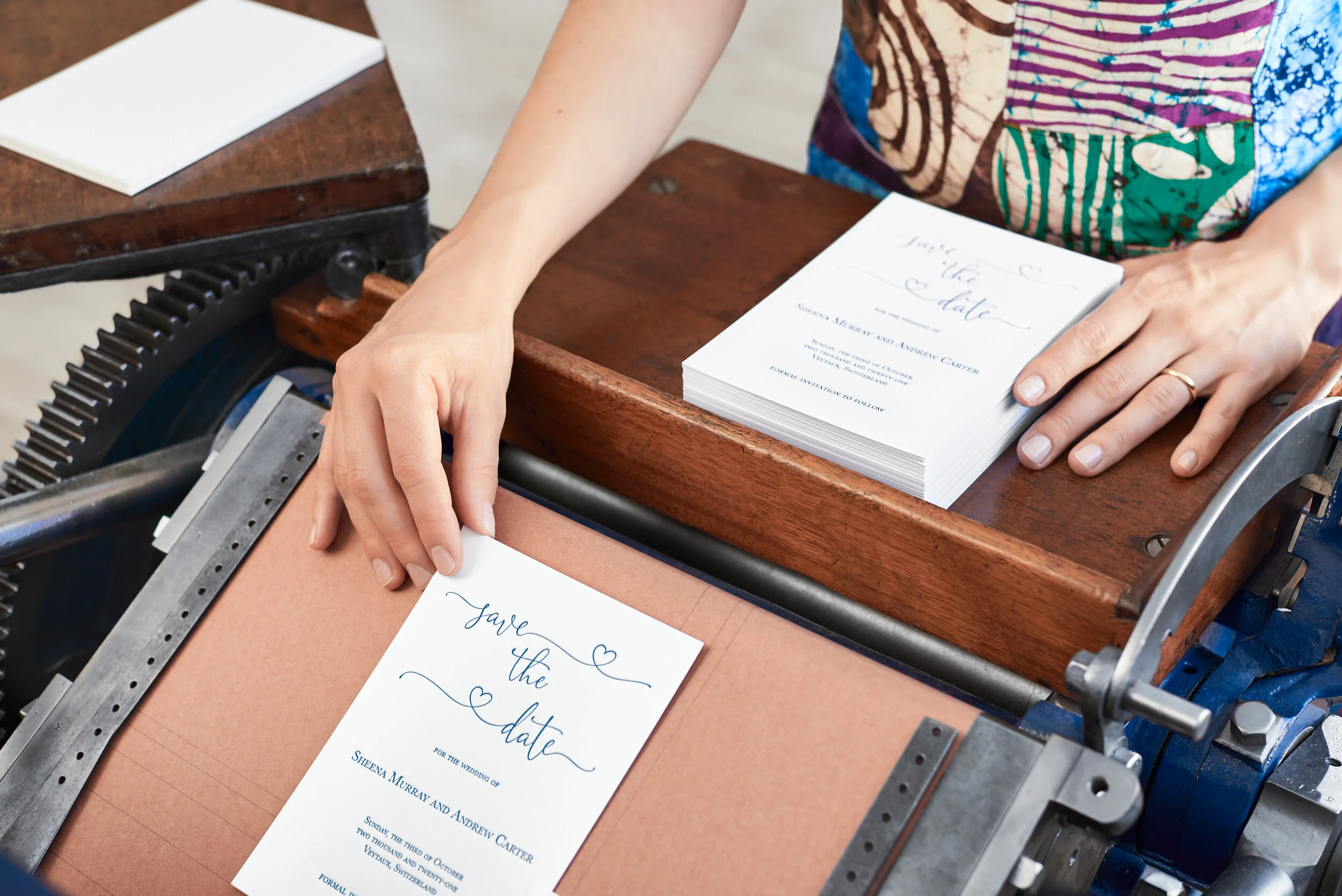
Printing
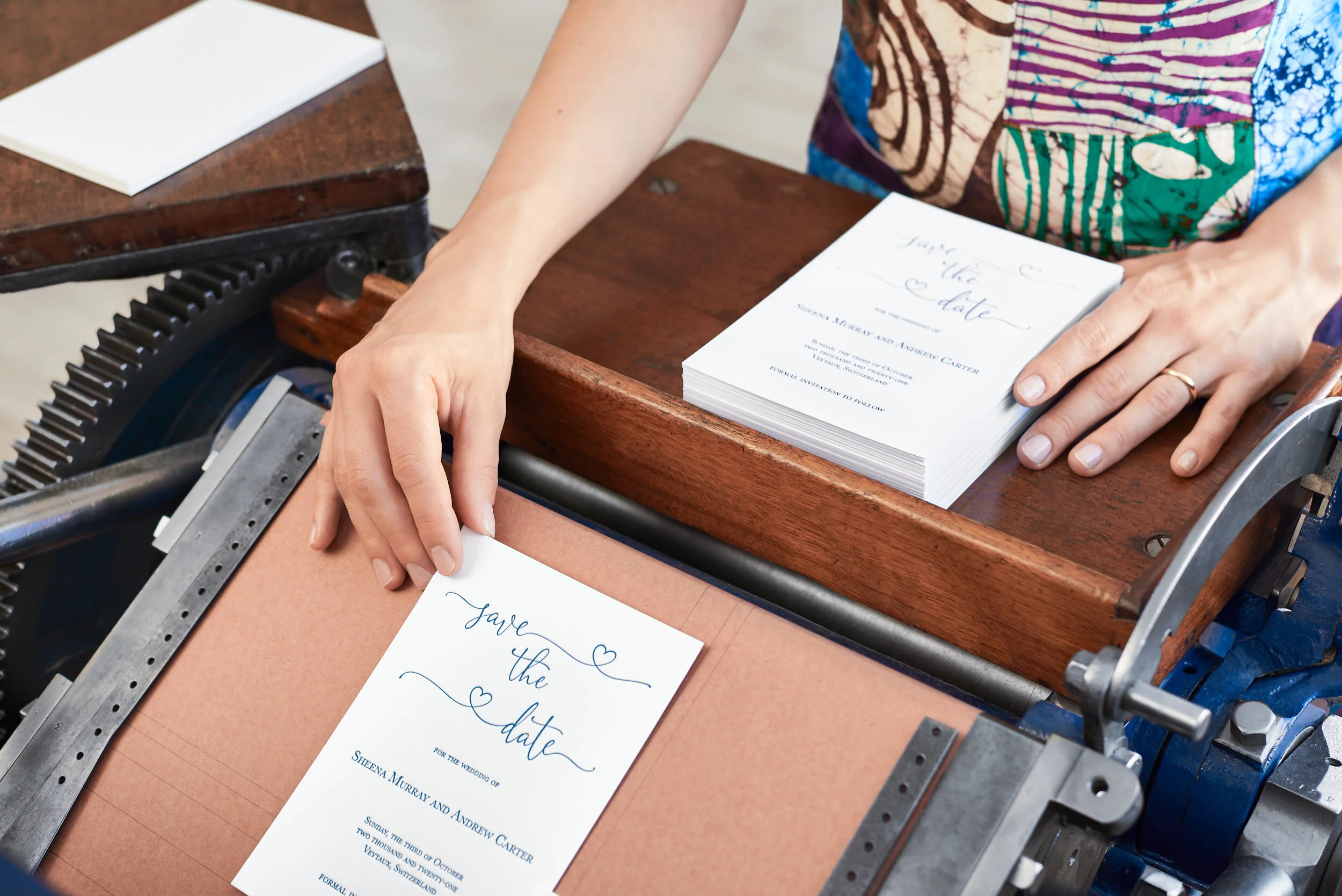
When the fine-tuning is complete and the printed design accurate, each blank sheet is slipped into the press and printed, one at a time.
I love the sound of the rollers sticking to the ink disc, followed by the rustling of the paper kissed by the plate!
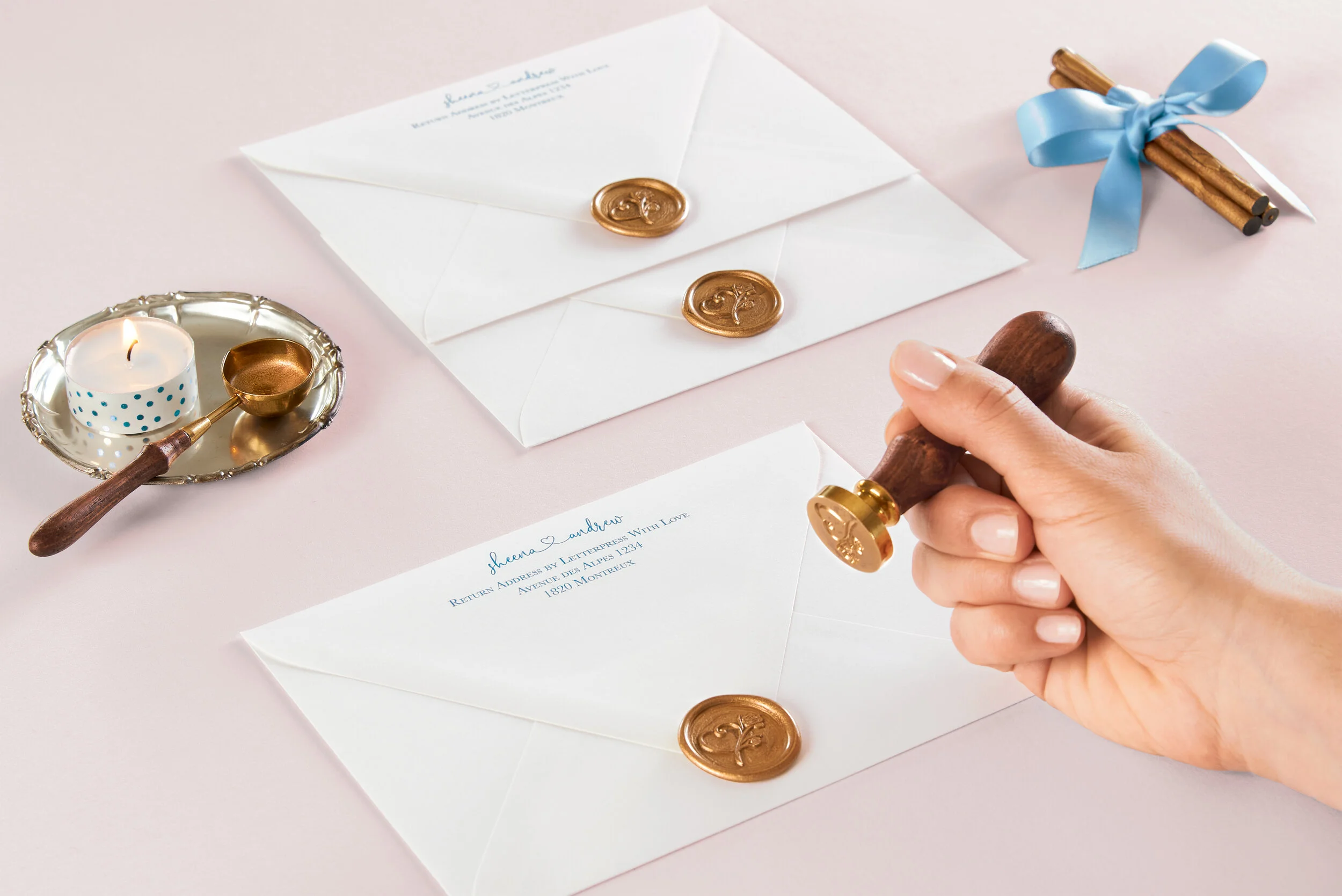
Embellishments
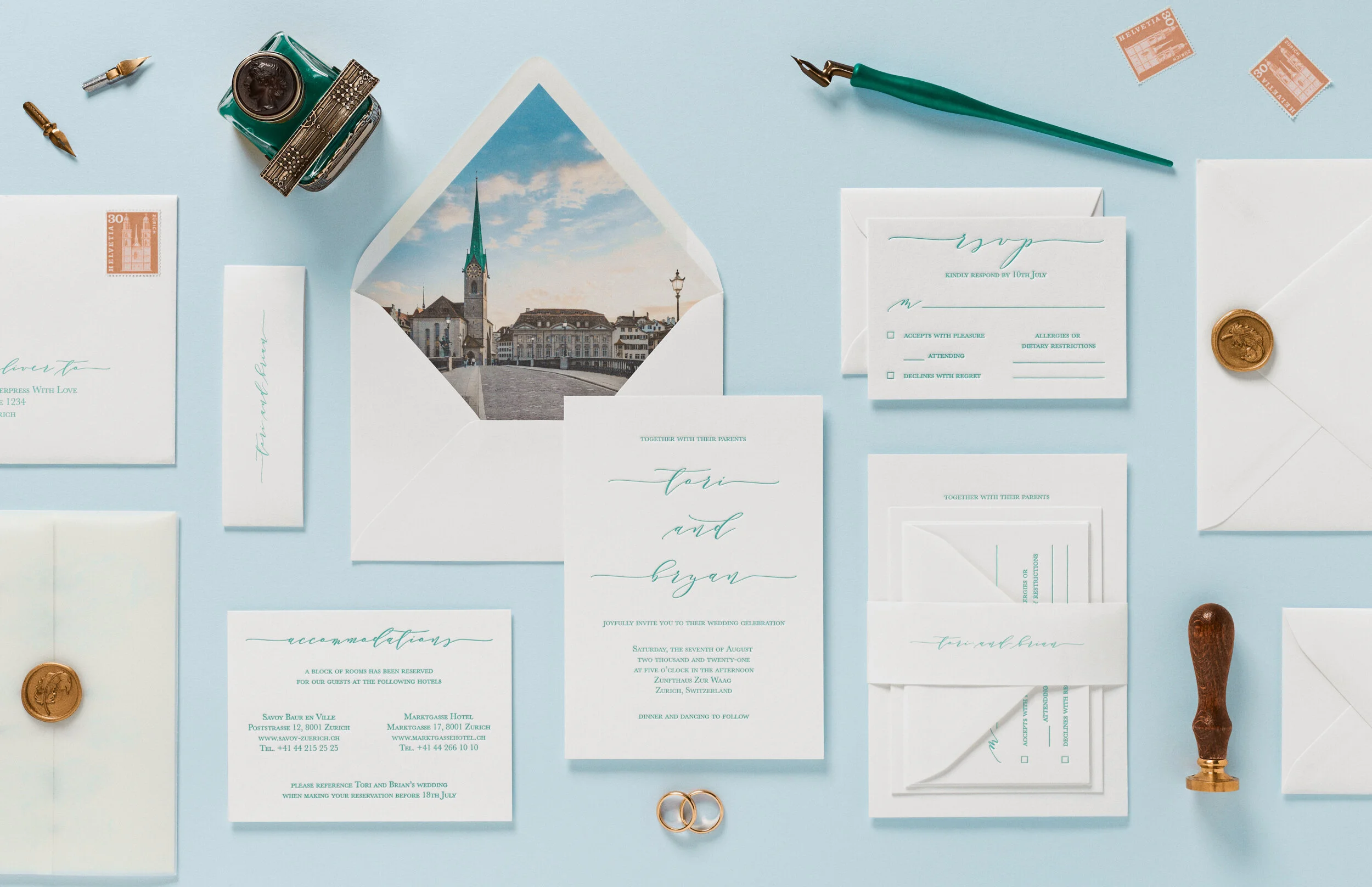
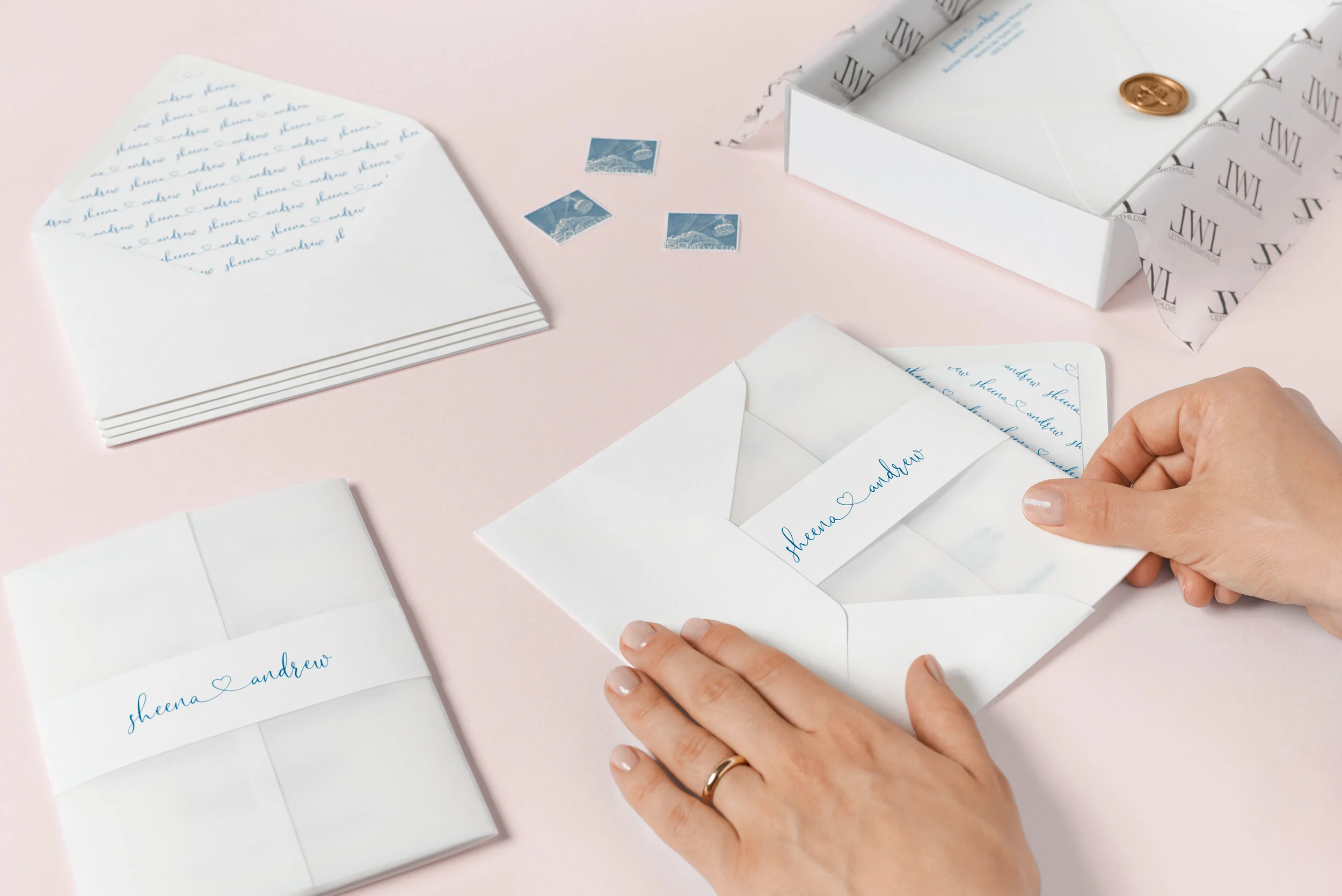
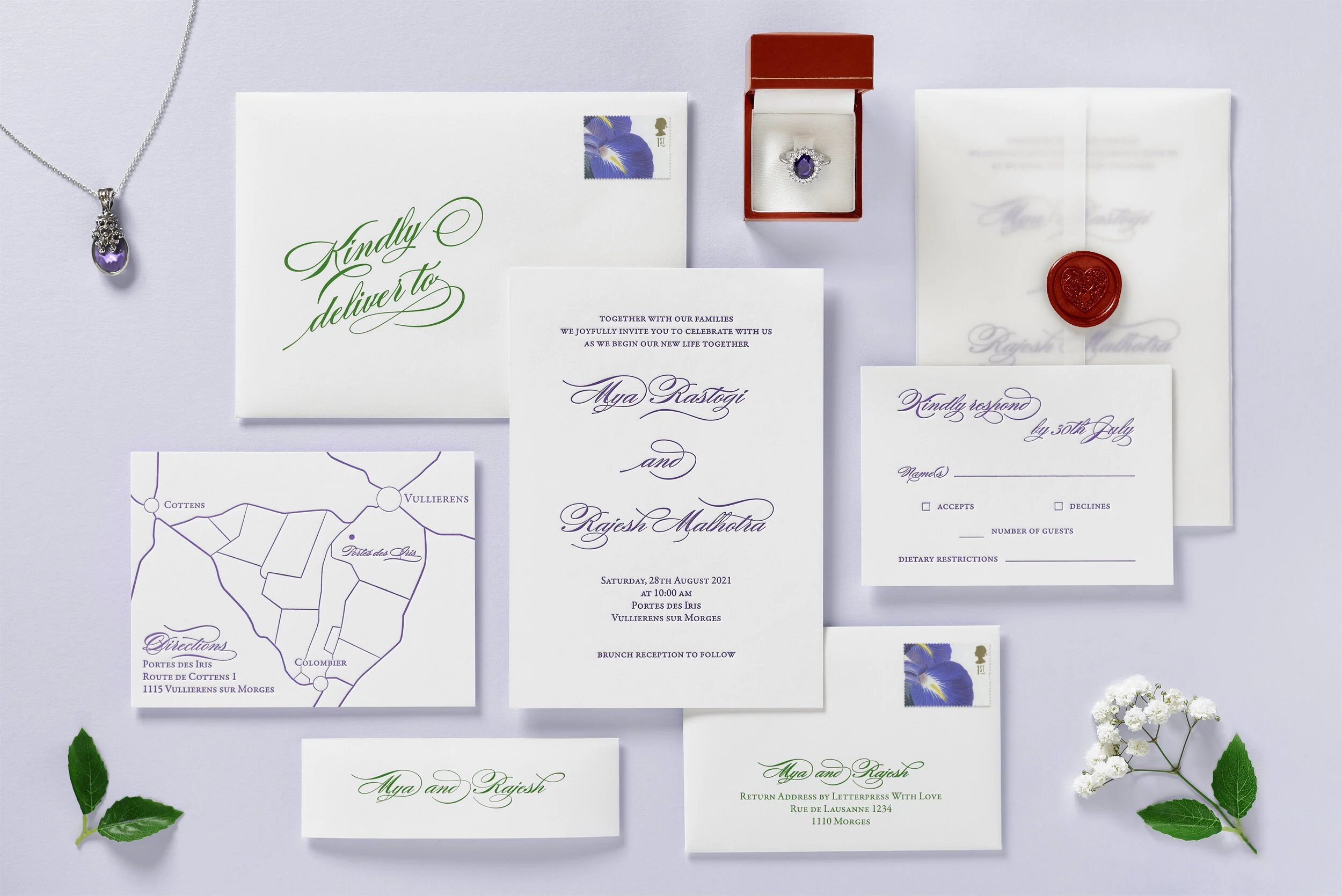
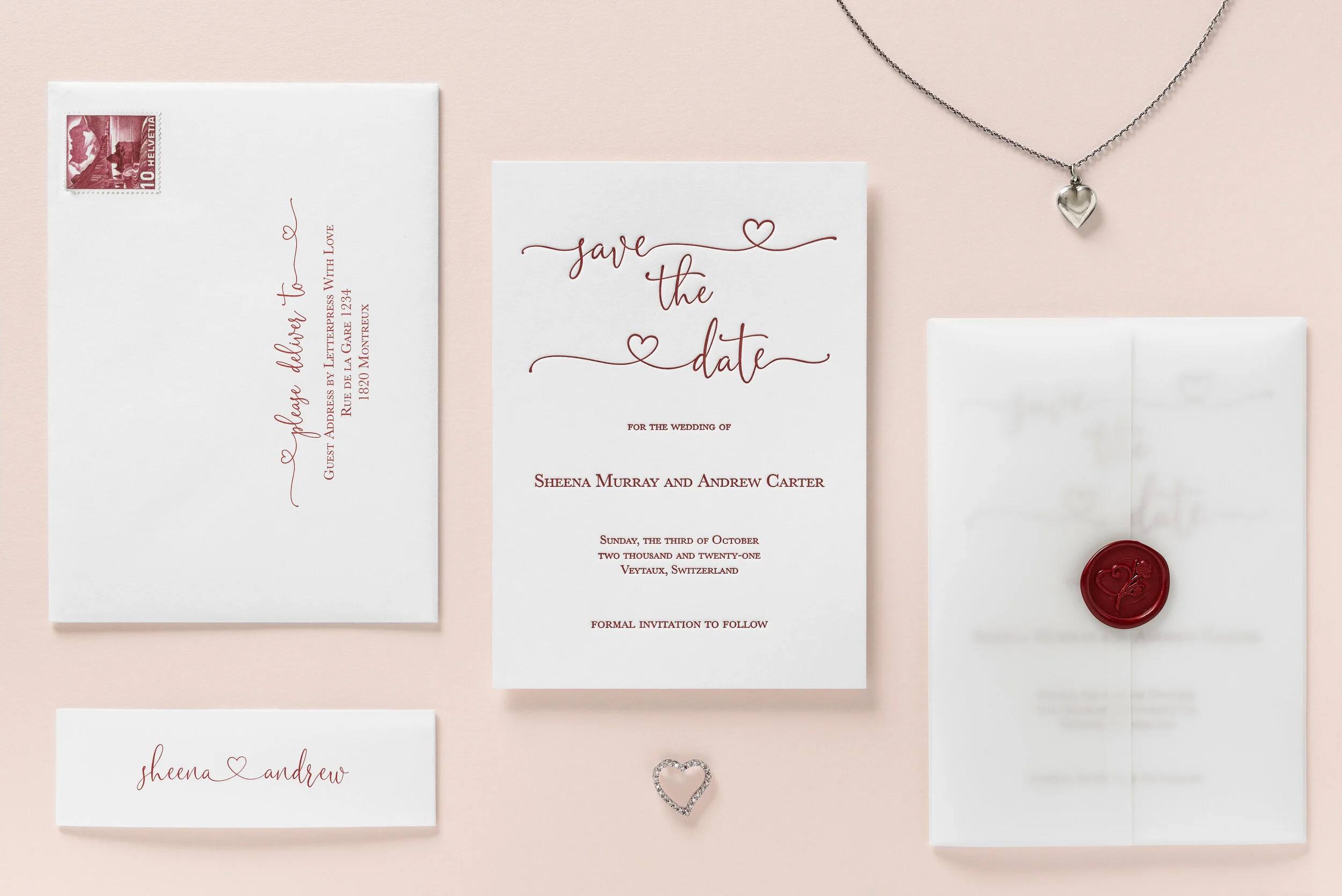
For those who want to add an extra touch to the printed stationery, I personally create different decorations.
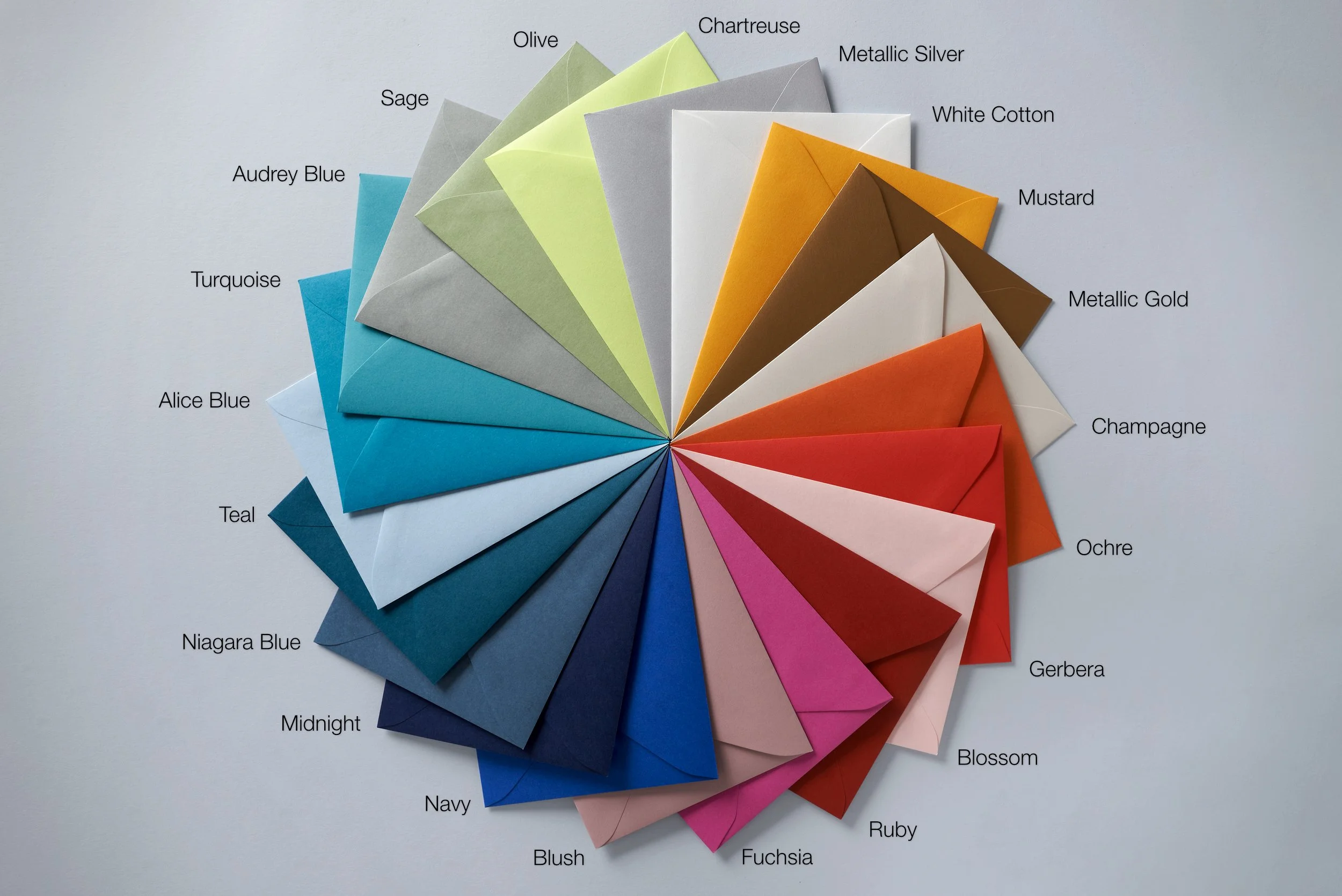
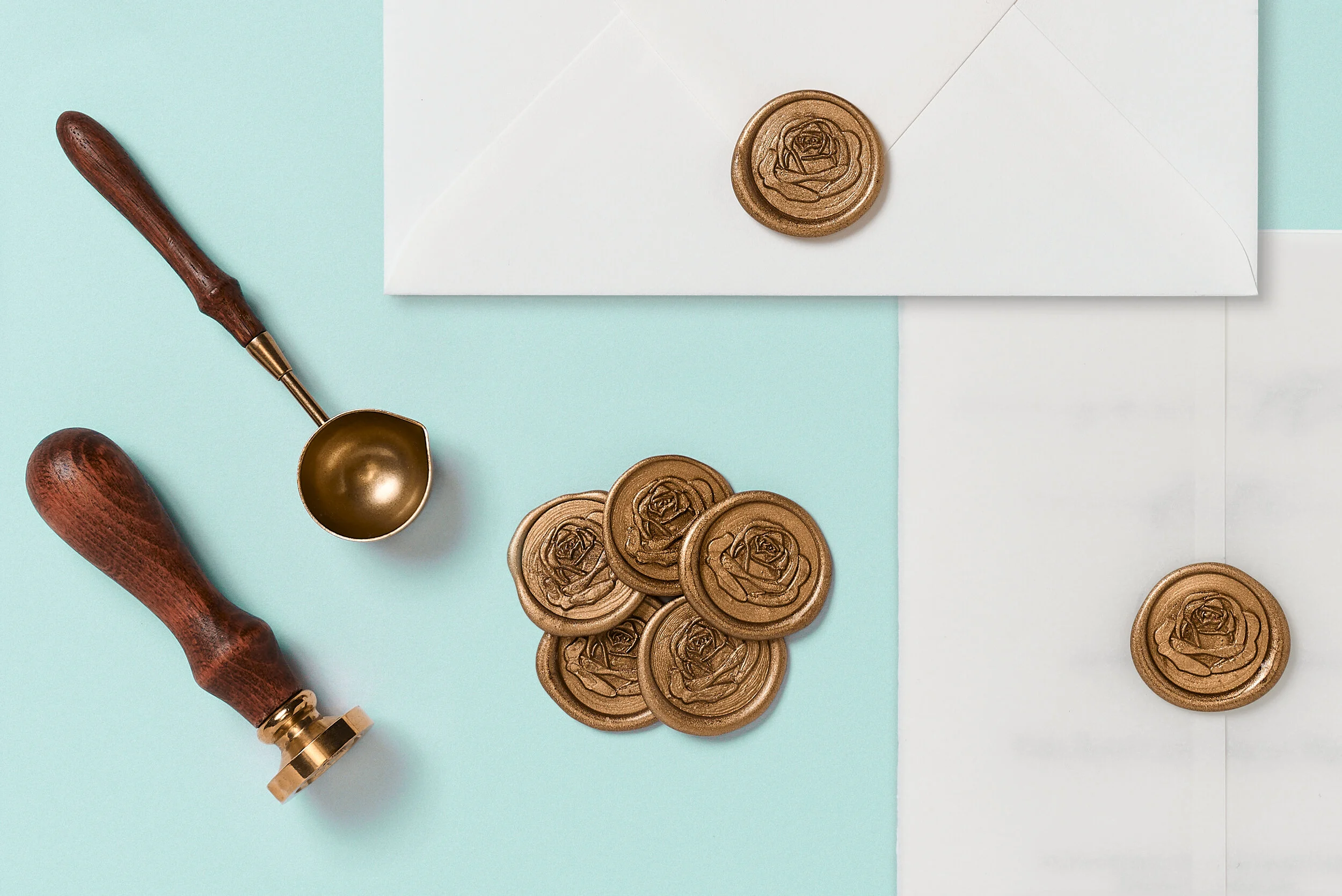
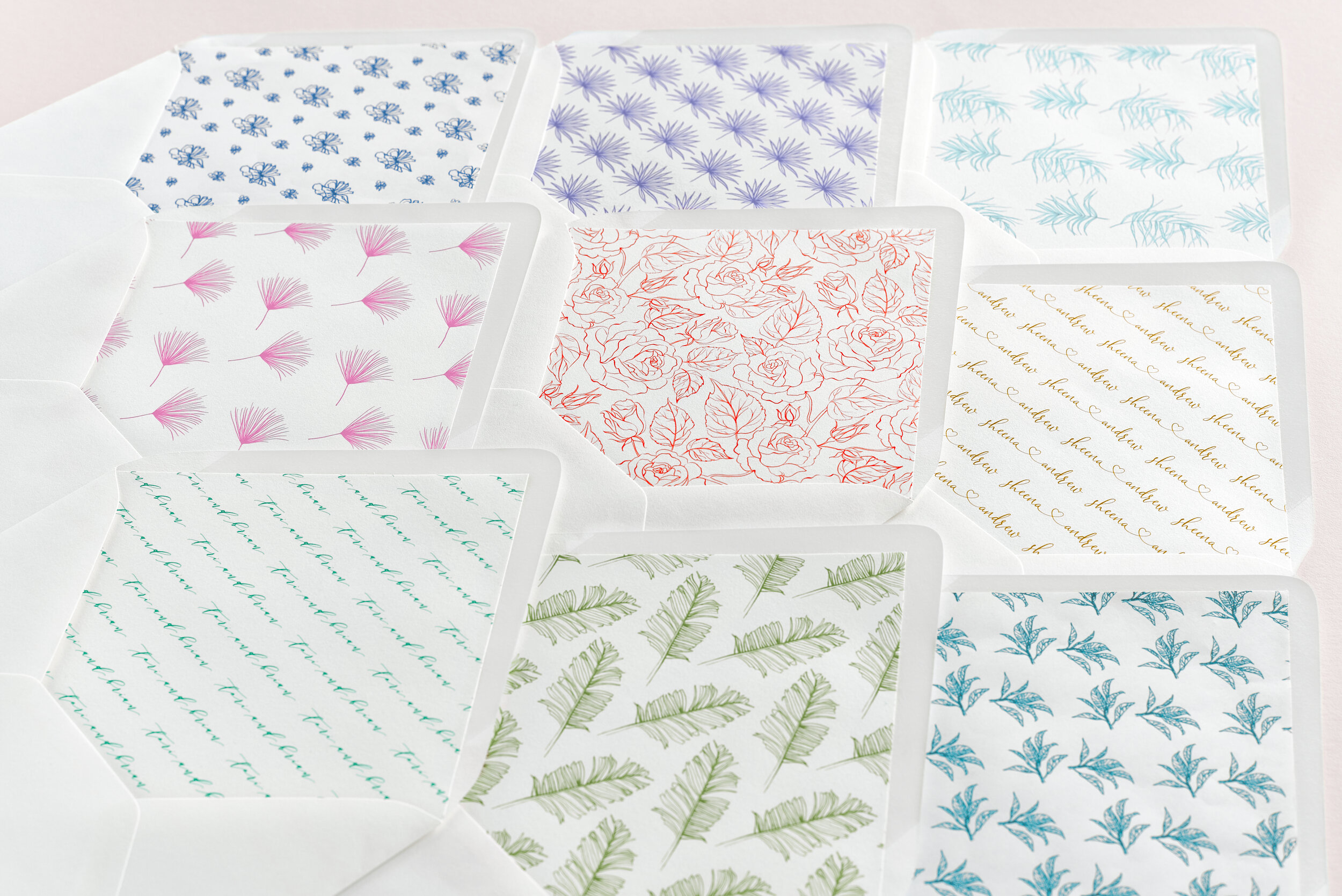
The available embellishments are belly bands, envelope liners, vellum jackets and wax seals.
I can print guests addressing and return addressing, to give consistency to the envelopes and spare you time.
Packaging and shipping
Once all stationery and embellishments are ready, I carefully package them and ship the insured parcel to your address.
I can pre-assemble the suites for you, if you wish so.
Discover the stationery
Options
Guides